
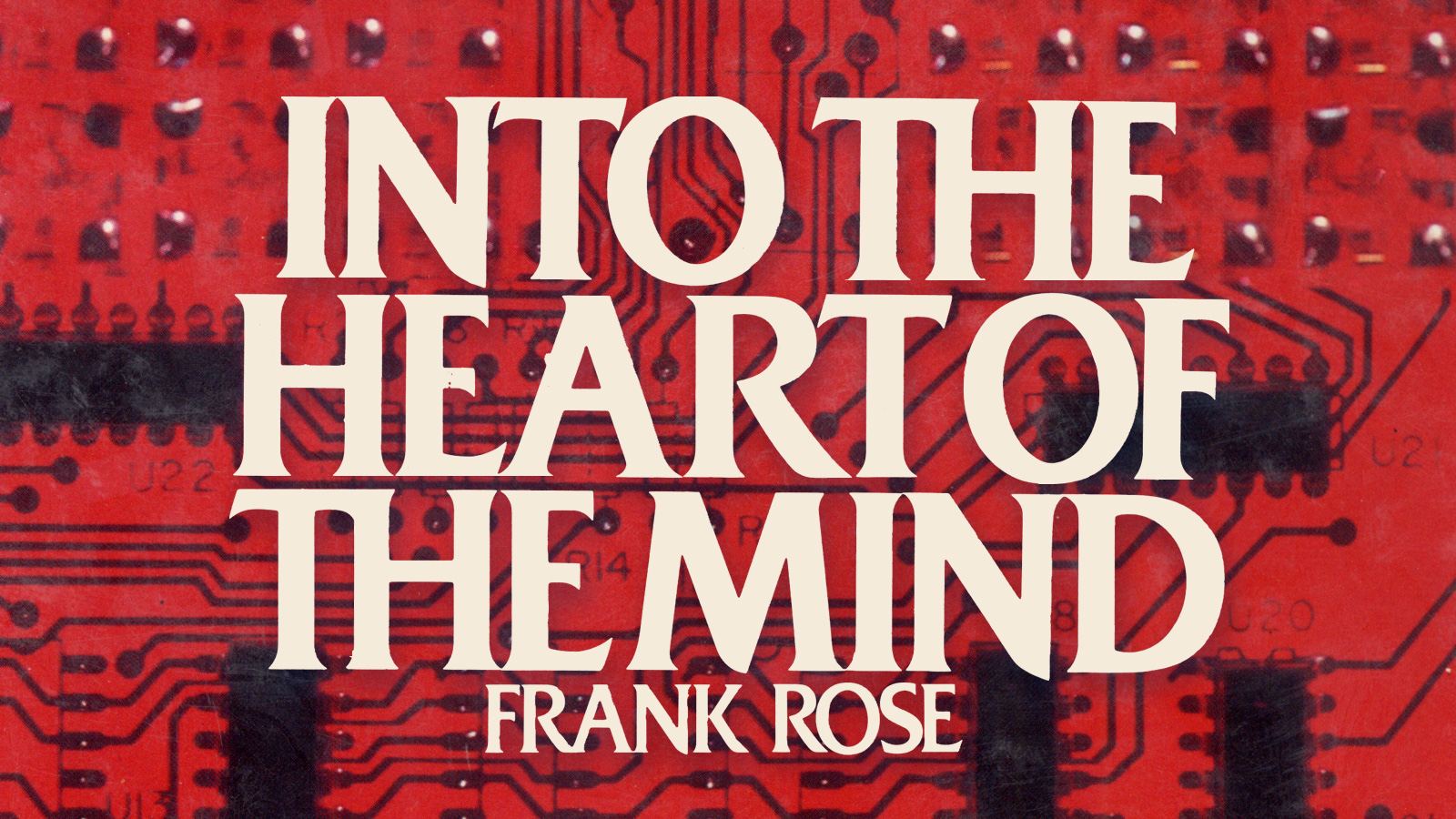


Into the Heart of the Mind
An American Quest For Artificial Intelligence
"A good, accessible report for the general reader on one of the most bizarre fascinations of modern science."
— Theodore Roszak, San Francisco Chronicle"Lucid and authoritative . . . it demystifies a disturbing subject. . . . No one knows how the cognitive areas [of the brain] work: how vision is interpreted, memory is stored, or thought is processed. No one even knows what thought is. Consequently, computer simulations of the brain are attempts to imitate the unknown."
— The Washington Post"An excellent job of demystifying the AI research community."
— The Houston Post"A science book that reads like a novel . . . fast-paced and fact-filled. "
— Booklist
FOR DECADES, some of the best scientific minds in the world have been competing to create artificial intelligence. But the approach they’re taking today — the approach that’s yielded such breakthrough programs as ChatGPT and seen startups like OpenAI and Anthropic reach valuations in the hundreds of billions of dollars — is dramatically new. AI in the 1980s was a very different proposition.
In the early ’80s, in a cramped laboratory tucked away in the cold, gray, concrete bunker that was home to UC Berkeley’s computer science division, a team of grad students was trying it the hard way. Their objective was to teach a superminicomputer named Kim No-VAX to think — not just to shuffle data but to reason, remember, understand English, and exhibit what we call “common sense.” Machine learning was a thing of the far-distant future. Like researchers at other AI labs at the time, this group had to program the computer with everything it knew. They would need to codify the entirety of human thought — a task a rival professor in the philosophy department, Hubert Dreyfus, mocked as misguided and impossible. From his point of view, you might as well be trying to climb a ladder to the moon.
The AI crowd would have none of this. “What does he mean, ‘It’s not possible?’” retorted Roger Schank, the Yale professor whose approach the Berkeley team had adopted. “There’s always somebody standing around saying ‘It’s not possible,’ so you do it!” But if it was really that simple, why were they still trying to get Kim No-VAX to put on a raincoat before going outside in the rain?
National best-seller ● Excerpted in Esquire as “The PANDORA Project” ● Profile of AI skeptic Hubert Dreyfus adapted from the book for Science 85 ● Also published in the UK, the Netherlands, West Germany, France, India and Japan




How Stories Work in a Data-Driven World
"As we’ve witnessed in the rise of conspiracy theories . . . science and rationality can be trumped by powerfully told, emotionally appealing, and endlessly repeated narratives that are contrary to verifiable facts. We can say that such narratives are divorced from reality, but as Frank Rose writes in ‘The Sea We Swim In,’ ‘reality is a construct, and narrative is the chief means of construction.’"
— Porchlight Books (staff pick)WE SWIM IN A SEA OF STORIES — stories that determine how we comprehend the world, that define our personal lives, our professional lives, our goals and ambitions and ideals. They can control us, or we can control them — if we know how they work. More about this book...
How the Digital Generation Is Changing Hollywood, Madison Avenue, and the Way We Tell Stories
"In his fascinating new book, [Frank Rose] talks about how the Internet is changing the way we create and consume narrative. . . . 'We are ceasing to be consumers of mass media,' says Rose, 'we are becoming participants in social media—a far more fluid environment in which we simultaneously act as producers, consumers, curators, and commentators.'"
— Ariana Huffington, The Huffington PostNOT LONG AGO WE WERE passive consumers of mass media. Now we approach television, movies, even advertising as invitations to participate. We are witnessing the emergence of a new form of narrative that is native to the Internet. More about this book...