Frank Rose

  Home | Wired | Books | Archive  

Recent Articles

Wired Magazine
And Now, a Game from Our Sponsors
Secret Web sites, coded messages, hidden songs—explore the new world of immersive games.
A Second Chance for 3-D
Hollywood is tapping into the third dimension—starting with Angelina Jolie in Beowulf.
Lonely Planet
Inside Second Life: How Madison Avenue is wasting millions on an empty digital world.
Philip K. Dick Goes Legit
Ushered into the canon by the Library of America: An interview with Jonathan Lethem, novelist and fan.
And Now, a Word From Our Customers
Chevrolet asked Web users to make their own video spots for the Tahoe. A case study in customer-generated advertising.
Can the PS3 Save Sony?
If Sony's new $600 console doesn't blow gamers away, it may be time to say sayonara.


Find Authors

Dear Hollywood Studios: Let My Video Go


Wired Magazine
March 2008

It's early December, and you've been watching DVDs of The Wire, HBO's addictive crime drama, for four hours. Now it's past midnight, and you've just finished season three. You're hooked and ready for more, but season four is nowhere to be found. The DVD set was recently released, but neither Barnes & Noble nor the local video store has it yet, and anyway, they're closed. Netflix offers it, but that would mean a three-day wait for the DVDs to come by mail. Amazon Unbox? iTunes? Netflix Watch Instantly? Not available. Only one place will deliver The Wire right now: BitTorrent.

If this sounds familiar, it's because we've already suffered through the same frustration with the music industry. Nine years ago, MP3s were opening up entirely new possibilities for sharing, discovering, and listening to music. But instead of capitalizing on the advantages of digital files, the major labels (fatter than ever from CD sales) started suing. When they grudgingly agreed to Apple's plan for the iTunes music store, it was only under the condition that tracks come burdened with digital rights management software. Of all the possibilities the Net had to offer, music executives were obsessed only with online theft. That meant people couldn't get the songs they wanted the way they wanted unless they turned to peer-to-peer services — which they did by the millions. And while DRM did not stop pirating, it did, in tandem with the incredible popularity of the iPod, give Apple a lock on legal downloads. Today, their industry in shambles, music execs are trying to turn back the clock, remove DRM, and finally give us what we should have had in 1999.

Now the home-video industry is going online. Apple has brought movie rentals to iTunes, Amazon is selling and renting movies online, Netflix has started digital downloads, and Comcast has promised almost everything-on-demand eventually. We have the bandwidth, the compression algorithms, and the Ethernet connections — not to mention TiVos, Apple TVs, and Vudus — for downloading movies directly to the TV. We should no longer have to drive to the video store or wait for the mail carrier. But that's not the case. Once again, the entertainment industry seems determined to blow it.

To succeed in the digital realm, Hollywood needs to offer total convenience, almost infinite choice, and the freedom to watch any way we want. Instead, we have iTunes, which delivers video you can't watch on any portable device that wasn't made by Apple, and Amazon Unbox and Netflix's Watch Instantly, which provide downloads you can't watch on any device that was made by Apple. And with a mere 1,000 downloadable movies for rent on iTunes, fewer than 5,000 on Amazon, and around 6,000 on Netflix, none of them offers anything close to the 90,000 DVDs available by mail. They can't, because Hollywood is hoping to protect DVD sales at the expense of electronic downloads. It won't succeed, any more than the music industry could keep Tower Records afloat — but if people don't find what they want at online storefronts, pirate copies are just a click away.

The lessons from the music fiasco are clear: Trying to limit the inherent advantages of digital files is a losing strategy. The way to stop piracy is to make everything available — easily, legally, and at a fair price. But it's a lot of work to secure Internet rights to old films and TV series from writers, directors, composers, and the like, and the studios show little inclination to monkey around with their lucrative sales to premium channels like HBO — deals that don't affect DVD sales but are written in a way that can keep electronic distribution rights locked up for years. "There would be a lot fewer Mercedes pulling up to the Palm every day without those pay-TV deals," one exec quips. Right — but how many music moguls have you seen pulling up to the Palm lately?

Entertainment executives tend to find what they expect to find. If they fear theft, they'll see piracy; if they're looking for opportunity, they'll discover ways to profit. The music labels ignored the opportunity for so long that it has all but evaporated. The television and film industries still have a shot, but they need to move fast. Instead of hiring lawyers to lobby Congress and sue their customers, they need to set their legal minds to untangling messy rights issues and rethinking those profitable yet restrictive pay-TV deals. That way everyone would win: Customers would get what they want, the industry would make more money, and consumer electronics companies could innovate without fear of attack. Instead we have Rick Cotton, general counsel of NBC Universal, railing in a recent online debate against the "tidal wave" of illegally duplicated content that "simply must be reduced in any kind of law-abiding society." How to accomplish that? With digital locks, of course. Cotton is right on one point: A tidal wave is just what digital delivery brings — a tsunami of content, illegal and otherwise. But he needs to heed his own analogy. Locks can make you feel safer, but they won't keep you from drowning in a tidal wave.

Why We Love Blade Runner


Wired Magazine
October 2007

It's a classic tale of failure and redemption, the kind of story Hollywood loves to tell. Fresh off his second successful movie, an up-and-coming director takes a chance on a dark tale of a 21st-century cop who hunts humanlike androids. But he runs over budget and the financiers take control; the film plays to near-empty theaters, ultimately retreating to the art-house circuit as a cult oddity.

That's where we left Ridley Scott's future-noir epic in 1982. But a funny thing happened over the next 25 years. Blade Runner's audience quietly multiplied. An accidental public showing of a rough-cut work print created surprise demand for a re-release, so in 1992 Scott issued a hastily assembled director's cut. Now he's releasing Blade Runner: The Final Cut, which hit theaters in Los Angeles and New York in October, with a DVD in December. To accompany Wired Senior Editor Ted Greenwald's interview with Scott, I asked a wide range of people how the film had changed their world.


Zack Snyder
Director

I first saw Blade Runner as a sophomore in high school. I was 16 and it was an R-rated movie, so I shouldn't have been there. Star Wars was my favorite movie at the time, but Blade Runner just rocked my world completely. All those awesome Syd Mead designs for buildings and cars and things—just incredible images that get burned into your psyche like some sort of involuntary reference that gets recycled through cinema for the rest of time. It was one of those movies you can’t help but start to quote. You could be making a doughnut commercial and if for a second someone goes, “Gosh, that looks like Blade Runner,” you're like, “Oh, that's awesome.” It becomes this lesson from the master that says, “Go out into the world and do good.”

Scott Bukatman
Cultural Theorist

The whole film is founded on uncertainty. The first level of uncertainty is whether or not someone is a replicant, but the real uncertainty is whether or not it actually matters. And all this is taking place in a world where you can no longer tell the original from a copy. Blade Runner was released at a time when people were using computers for the first time, when they started dealing with people from a distance and not necessarily knowing whether there's a person on the other end. I think we've adapted to these new technologies in blindingly rapid fashion. If there’s uncertainty about what’s real, we've learned to just go with it. But we haven't answered these questions—we've just learned how to ignore them.

Craig Venter
Geneticist

The movie has an underlying assumption that I totally don't understand: that people basically want a slave class. As I think about the potential of engineering the human genome, I think, wouldn't it be nice if we could have ten times the cognitive capabilities that we do have? Or if we could improve the ability to survive in a higher CO2 concentration, which we may be faced with as a means of survival? But people ask me if I could genetically engineer a very dumb person to work as a slave. I've gotten letters from guys in prison asking me to engineer women they could keep in their cell. I don’t see us as a society doing that.

Ray Kurzweil
Futurist

This scenario of biological humans hunting four human-level cyborgs—that's not how artificial intelligence will roll forward. If you are a Parkinson's patient today, you can put a pea-sized neural implant in your brain that allows you to download new software. Increase that device's capability by a billion and decrease its size by a hundred thousand and you get some idea of what will be feasible in 25 years. We also will have intelligent robots, some of which may look human-like and some of which may not. But even completely non-biological entities will be derived from human intelligence. So it’s not going to be a matter of walking into a room and saying, “Okay, cyborgs on the left, biological humans on the right.” These entities are going to be all mixed up.

Raymond Kelly
New York City Police Commissioner

The movie’s accolades as a cult classic and a sci-fi masterpiece are well deserved, but at bottom, I see Blade Runner as a very human and familiar story—a police story. Anyone with an ounce of the police-blue blood in his veins must love the hunter portrayed by Harrison Ford as Deckard. He’s reminiscent of many a seasoned NYPD detective whose job is to bring to ground replicants of another sort—the sociopaths, gun traffickers, and drug dealers who managed to commit some 500 murders last year in New York City. In the year Blade Runner debuted, they killed 1,668. And though it was set in L.A. in the year 2019, Blade Runner would have resonated with the many who, in 1982, imagined an irrevocable downward spiral for American cities in general. Police agencies and other arms of government were behind the technological curve. Then as now, large corporations were more likely to have the technological edge. In that respect, the film was prescient.

Will Wright
Game Designer

When I was researching Sim City I read a lot of city planning documents, and it was amazing how often the term Blade Runner came up—you know, 'We don't want Union Square to turn into Blade Runner.' But there was a concept that we used that was nicely realized in Blade Runner—the idea of arcologies, these massive structures that are like whole cities within a single building, like the pyramid where Tyrell lives. You have these giant arcologies where everyone has gone because they're the modern places, yet you have all this old infrastructure that's ignored and abandoned right underfoot. A lot of squatter cities have a similar dynamic—you have people living in the cracks without standard infrastructure, kind of like rats in the sewer.

Mamoru Oshii
Anime Director

Twenty-five years ago, I was feeling dissatisfied with Japanese animation's focus on characters and stories at the expense of environments. Suddenly, the world that I was vaguely imagining appeared in front of me. I felt totally overwhelmed, but at the same time I realized that what I was attempting to do was not wrong at all. Ridley Scott succeeded in creating an epoch-making movie conceptualized around a worldview. He visualized a world that nobody had ever seen, using elements familiar to anyone. Spinners coexist with bicycles; Asian-style food stalls spring up in the alleys between highly technological skyscrapers. I did not get fascinated by Harrison Ford or Sean Young. I got intoxicated by the Blade Runner world itself.

Moby
Musician

It was very seductive—the fact that it was always raining, it was always nighttime, and when it wasn't nighttime it might as well have been because everything had this pall cast over it. And the score was such an integral and perfect component of the movie. It really was the New Wave aesthetic of the time, perfectly crystallized in this movie. If someone were to remake the movie now, they'd probably have to throw in all these, like, Nickelback songs, but instead you have this very, very dark, unrelentingly gritty film with this very ethereal music on top of it. That contrast is what makes it. Without the music the movie would have been good, but with the music it was close to perfect.

Neil Gaiman
Novelist and Screenwriter

The look and feel of Blade Runner, even more than the story—I mean, I had read an awful lot of Dick, but I was lucky Blade Runner came on the scene because visually it helped define a future. The idea of a wasted urban landscape, of a sprawling high-tech conurbation, of a world in which we all stand out in the rain eating noodles—that was utterly Blade Runner. Kurt Vonnegut once said that what science fiction and pornography have in common is that they're both visions of impossibly hospitable worlds, but what Blade Runner did was create a dystopic, inhospitable world. It’s dark and it’s grungy and you wouldn’t want to live there—but you’d love to go there. And it rains.


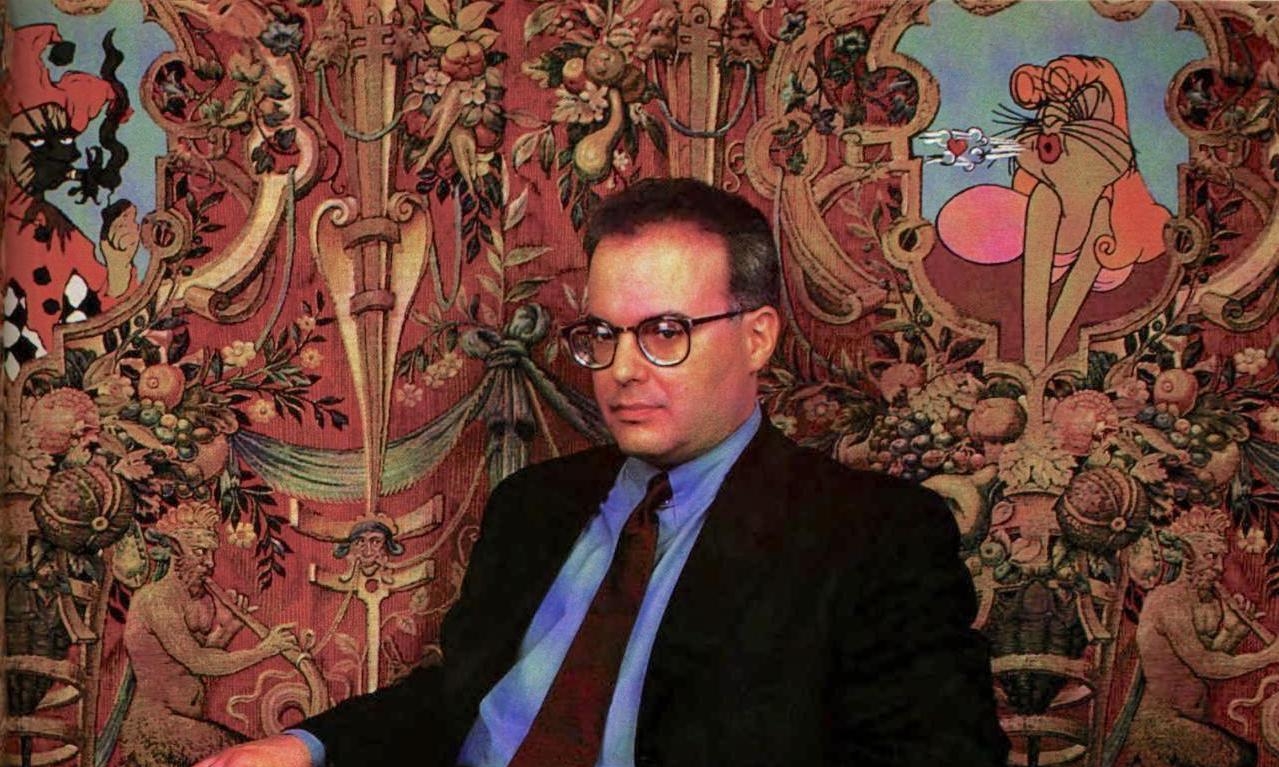
As a contributing editor at Wired, I've spent the past decade writing about the changes digital technology has wrought on media and entertainment. I've covered the competition in video games between Sony and Microsoft; the disastrous merger of Vivendi and Universal and the even more disastrous merger of AOL and Time Warner; Motorola’s efforts to stay afloat in the mobile phone business; and network television’s attempts to reinvent itself as viewers leave and advertisers threaten to follow. In the process I've interviewed such people as James Cameron, Steve Case, Barry Diller, Rupert Murdoch, Steven Spielberg, and Howard Stringer. I've also led debates about the future of media at such venues as the Cannes Film Festival and San Francisco's Churchill Club. On this site you'll find links to many of my major stories as well as expanded versions of some of the more recent pieces.

Before joining Wired, I was a contributing writer at Fortune, where I wrote about Hollywood and the global media conglomerates that dominate it. In the past I've worked as a contributing writer at Premiere, covering the film industry; as a contributing editor at Esquire, writing about pop culture and the rise of Silicon Valley; and as a contributing editor at Travel + Leisure. I've also written for The New York Times Magazine, The Los Angeles Times Magazine, New York, Vanity Fair, and Rolling Stone.

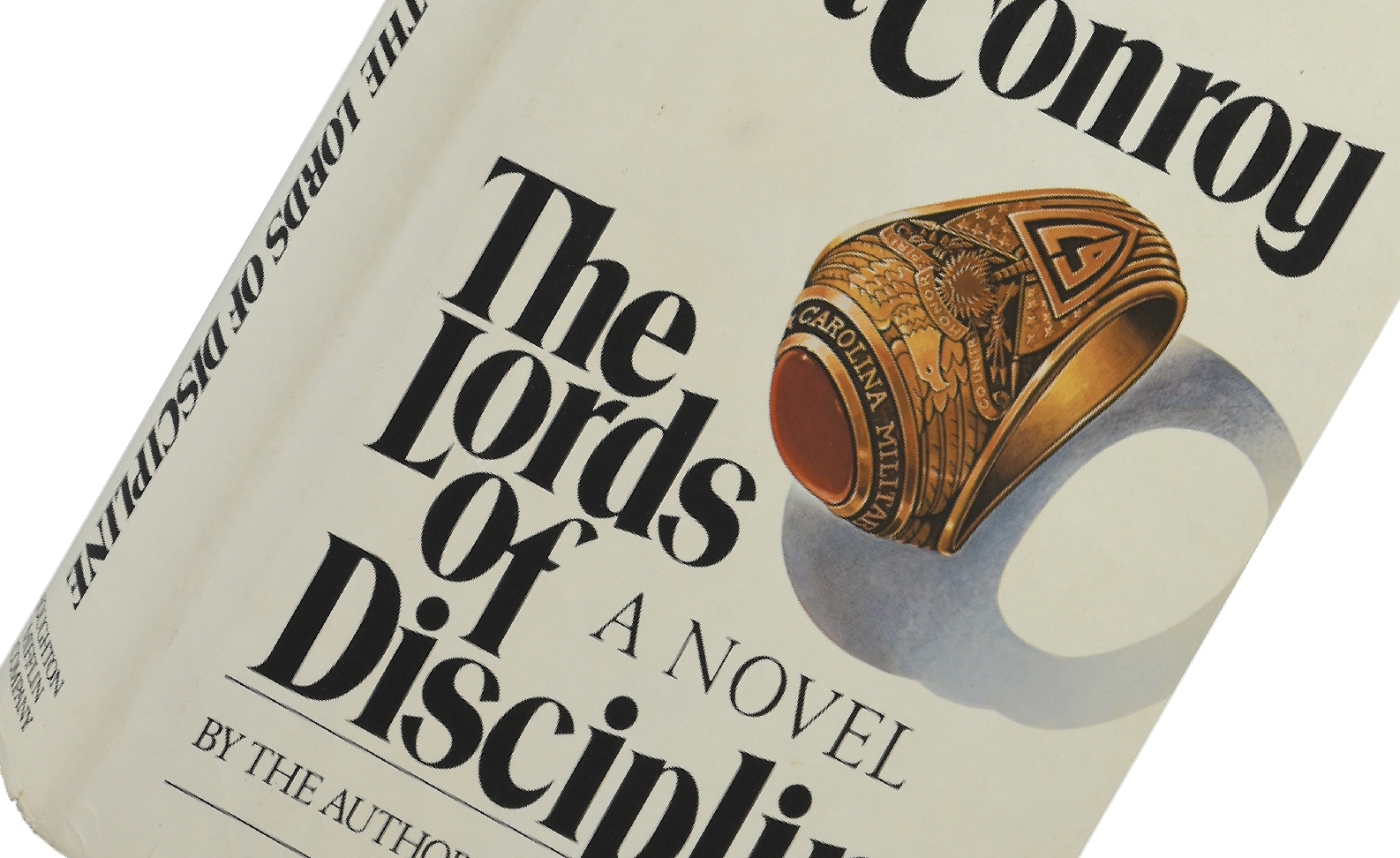
My most recent book is The Agency: William Morris and the Hidden History of Show Business, a detailed look at the oldest and for many years most powerful agency in Hollywood. Published in 1995 by HarperCollins, The Agency is an alternate history of show business—a multi-generational saga of loyalty and betrayal that stretches from the vaudeville era to Morris’s near-demise at the hands of Michael Ovitz. My previous book, West of Eden: The End of Innocence at Apple Computer (Viking, 1989), chronicled the launch of Macintosh and the power struggle between Steve Jobs and John Sculley. A national best-seller, it was named one of the year’s ten best by Business Week. I'm also the author of Into the Heart of the Mind: An American Quest for Artificial Intelligence (Harper & Row, 1984), a national best-seller about the efforts of a group of researchers at Berkeley to give a computer common sense.

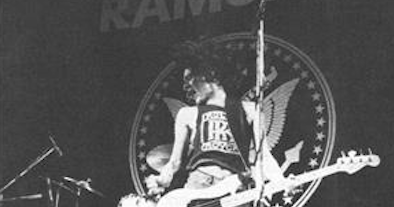
A native of Virginia, I moved to New York shortly after receiving a B.A. in journalism from Washington & Lee. I started out covering the Lower Manhattan punk scene of the '70s for The Village Voice, chronicling the emergence of Patti Smith, the Ramones, and Talking Heads. I live in the East Village, a neighborhood that still retains echoes of Allen Ginsberg, W.H. Auden, and Peter Stuyvesant.


View Frank Rose's profile on LinkedIn

Created by The Authors Guild

A note for users of older versions of Internet Explorer, Netscape, or AOL:
This site will look a lot better in a newer browser. Download one for free!
Internet Explorer: Windows Mac   |   Netscape: Windows Mac Other
For AOL users, please choose Internet Explorer above.